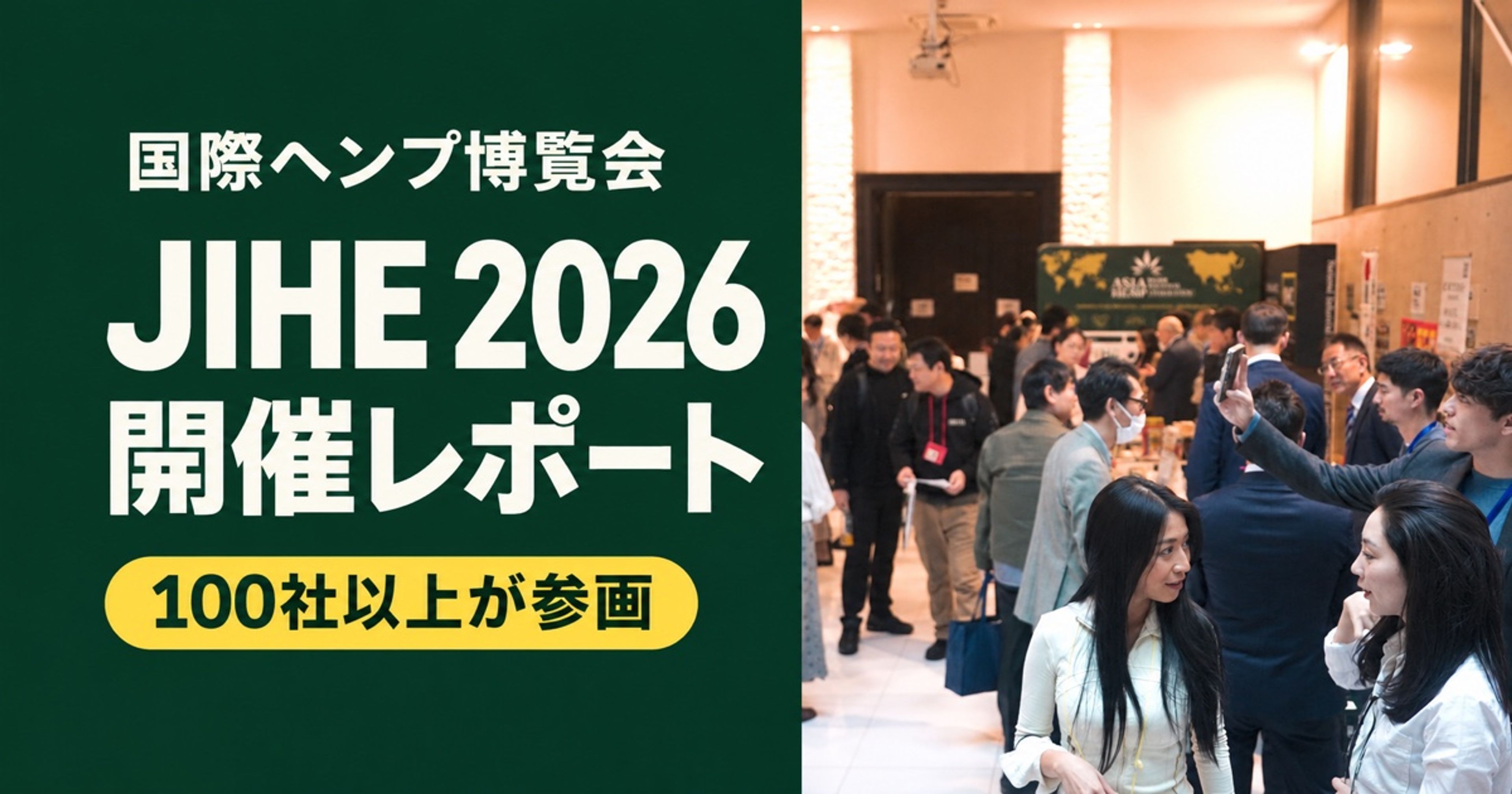
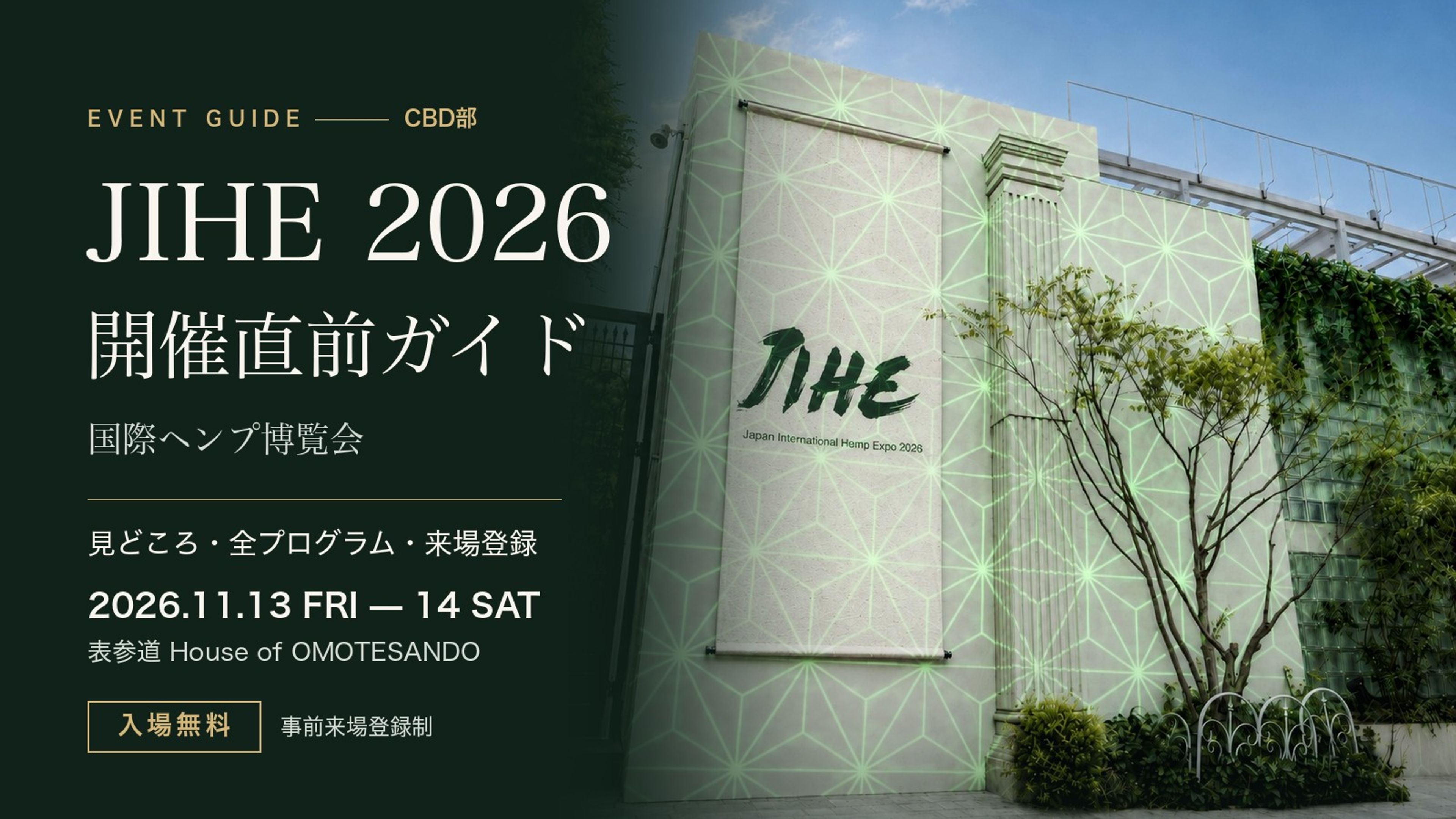
JIHE 2026 Event Report: Two Days Exploring Hemp in Omotesando
Read this report in Japanese / 日本語版はこちら
JIHE 2026, the Japan International Hemp Expo, took place on Friday, November 13 and Saturday, November 14, 2026, at House of OMOTESANDO in Tokyo's Omotesando district.
First, we would like to express our sincere thanks to our three official sponsors: Control Union, Kiseki Group, and TrueImports. Their support made it possible to bring together experts from Japan and abroad to discuss hemp's possibilities and the challenges facing the industry.
We also thank everyone who visited, exhibited, sponsored, spoke at, or helped run the event. This photo report looks back at the AIHF roundtables held the day before the expo, the exhibition, the CannaCon conference, and the conversations that continued throughout the event.
This report is published by CBDbu, operated by Asabis Inc., the organizer of JIHE 2026.
Thanking our three official sponsors
Our official sponsors work in three distinct areas: inspection and certification; cultivation technology and pharmaceutical development; and quality management and international distribution. Each brought expertise that is essential to developing the hemp and cannabinoid industries, and each helped make this year's event possible.
Control Union: supporting quality and trust through inspection, testing, and certification
Control Union is a global group providing inspection, testing, and certification services. Across sectors including agriculture and textiles, it offers systems for verifying products, raw materials, and their supply chains. Demonstrating quality and compliance with standards is also an important challenge when bringing hemp foods, textiles, and materials to market. Visit Control Union's website
Kiseki Group: applying plant-factory technology to cultivation and pharmaceutical development
Kiseki Group uses plant-factory technology in work ranging from the cultivation of raw materials for medical cannabis to the development of cannabinoid medicines. Its activities include designing, building, and operating plant factories, connecting cultivation and quality management with pharmaceutical development. This reflects JIHE's interest in considering the whole journey from cultivation to medical practice and patients' needs. Visit Kiseki Group's website
TrueImports: connecting quality management with international distribution
TrueImports supports businesses bringing cannabinoid products to the Japanese market, including document management through quality management systems and import logistics. Its work addresses cross-border regulatory compliance and the systems needed to trace information through supply chains. Quality management and traceability were also among the themes explored at this year's CannaCon. Visit TrueImports' website
Expanding the possibilities of products and materials also requires reliable systems for cultivation, quality, and distribution. We are grateful that these three companies supported JIHE's purpose and joined us as official sponsors.
An expo made possible by a diverse community of companies and organizations
JIHE 2026 brought together more than 100 participating companies. Alongside exhibitors, sponsors, supporting organizations, and media and community partners contributed in many different ways. The range of expertise involved, from food, clothing, and materials to cultivation, medicine, testing, and distribution, is a defining feature of JIHE. The logo collection below introduces the participating companies and organizations.

Discovering the many sides of hemp across four floors in Omotesando
JIHE began as CBD Journey, an event focused on a single compound: CBD. Last year, we expanded that focus to the whole hemp plant from which CBD is derived. This year, people working in the broader hemp field outnumbered those in the CBD sector for the first time. Food, clothing, materials, cultivation, and traditional culture all formed part of the picture. As organizers, we could see how a community that grew around CBD had expanded to include people working with the plant's many other uses.
Combining the exhibition with the CannaCon conference, this year's JIHE moved from Shinjuku to Omotesando. The event was organized by Asabis Inc. and co-organized by GREEN ZONE JAPAN.
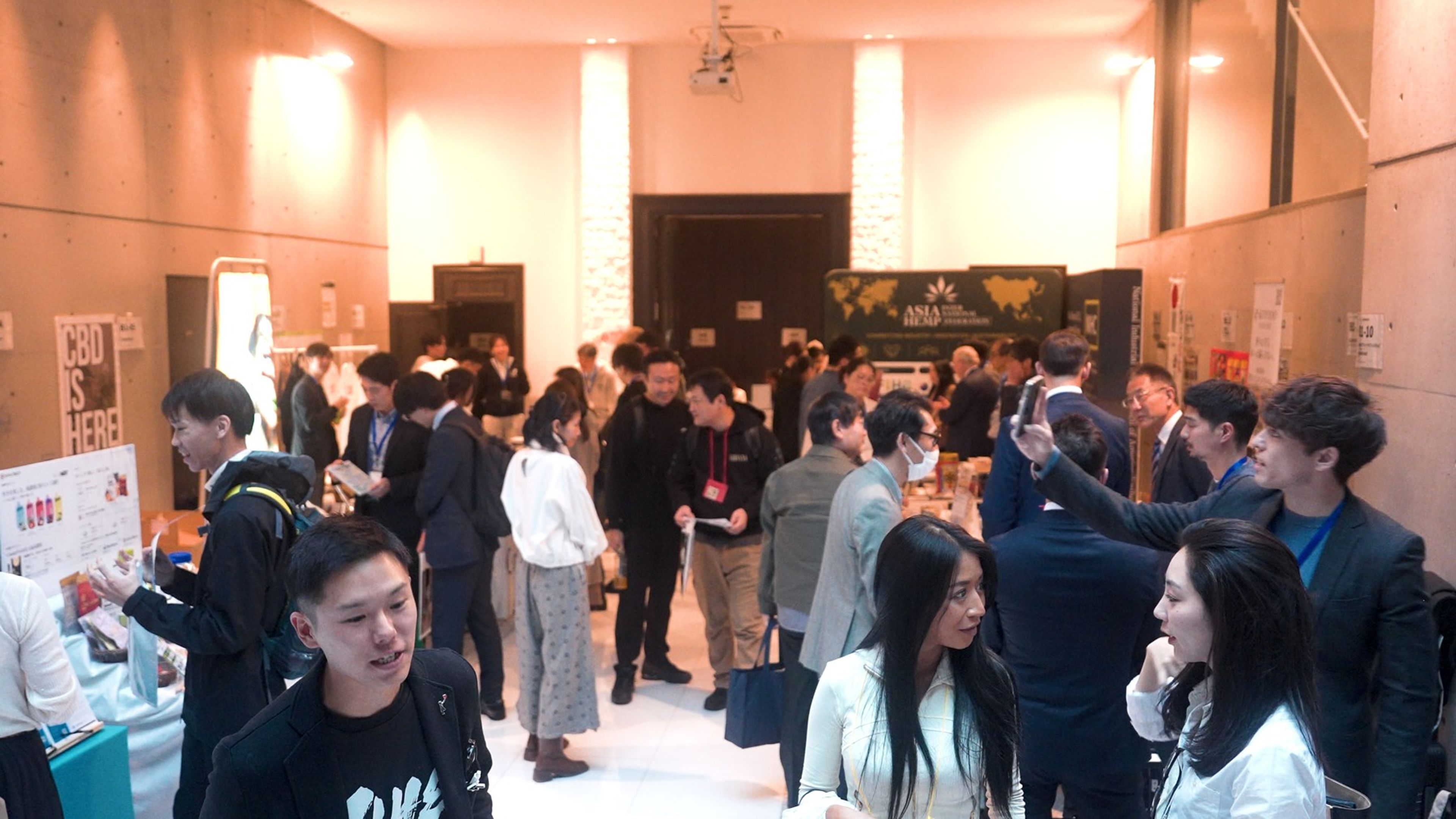
House of OMOTESANDO is located in Jingumae, Shibuya, within walking distance of Omotesando and Shibuya stations. We used four levels, from the basement to the rooftop, to bring exhibitions, business meetings, conference sessions, and networking together in one building.
- B1F, Sky Hall: the main exhibition floor. CBD Journey and HEMP Journey booths offered everything from CBD products to foods and materials, with exhibitors on hand to explain their work.
- 1F, Lounge: reception and business meetings. Alongside the visitor reception, this floor provided space for business discussions and meetings, as well as a drinks booth.
- 2F, White Hall: CannaCon and hands-on hemp experiences. The conference shared the floor with an area where visitors could explore clothing and materials. On the evening of November 13, the same hall became the reception venue.
- RF, Rooftop Terrace: outdoor breaks and conversation. Booths were also set up here on November 13, creating another setting in which to discover products and talk with exhibitors.
The theme was 'Break the Bias, Back to ORIGIN.' November 13 was BUSINESS DAY and November 14 was COMMUNITY DAY. Visitors could discover products at the exhibition, learn about their background upstairs, and continue conversations in the lounge or on the rooftop. Moving between floors offered different ways to engage with hemp over the two days.
Visitors picked up products while listening to explanations, spread out materials for discussion, and felt the fabrics of clothing on display. The products differed from booth to booth, but the chance to speak directly with their makers and the businesses behind them was a common thread.
People discover hemp in different ways. Someone who first encountered it through CBD products might find an interest in clothing or food; someone drawn to materials might stop to learn about quality management. Creating opportunities to broaden those interests is one reason we hold the exhibition and conference together.

The AIHF roundtables: a business perspective on fibers and cannabinoids
This year's international exchanges began before the expo opened. On November 12, the Asia International Hemp Federation (AIHF) hosted its International Stakeholder Consultation at House of OMOTESANDO, with support from Asabis.
Experts from Japan and abroad gathered around the table to discuss regulations, standards, and quality management supporting Japan's hemp industry. Participants passed microphones, listened to presentations, and heard one another's perspectives.

The roundtables covered two areas. The first focused on industrial hemp fiber, including cultivation and processing, textile and material applications, standards and certification, and the requirements for reaching the market. The second addressed hemp-derived cannabinoids, focusing on the systems that support business, such as product quality assurance, testing and analysis, and international trade.
Whether turning fiber into finished products or working with cannabinoids, many stages connect raw materials with the eventual user. Who processes them? Which standards are used to verify quality? Which markets will they reach? The discussions brought together the different requirements of these fields, with Japanese businesses and international participants considering them at the same table.
The consultation also aims to bring these issues together in a future white paper as a basis for continued discussion. Learn about the AIHF roundtables

For us, as a supporting organizer, a meeting that considered fibers and cannabinoids side by side captured the direction of this year's JIHE. It was also a chance to think about the industry systems behind the foods, clothing, materials, and CBD products that would be exhibited the following day.
The group photograph brings together participants who shared in the day's discussions. Meeting face to face across countries and areas of expertise provided a starting point for the exchanges that continued into JIHE.

Exploring the exhibition: food, clothing, and everyday uses
Food as a familiar connection to hemp
The food exhibits offered a look at culinary traditions that use hemp seeds and ways of bringing hemp into everyday life.
Yawataya Isogoro, the long-established shichimi spice maker from Nagano, was among the exhibitors. Its familiar red tins appeared alongside displays introducing the ingredients. Hemp seeds are one of the ingredients in the company's shichimi togarashi spice blend. This familiar seasoning offered a way to reconsider hemp's place in Japanese food culture. Visit Yawataya Isogoro's website

At the food counters, conversations continued as products changed hands. Visitors could look at the packaging, ask exhibitors questions, and imagine how they might use a product at home. Food offers a way into hemp that does not require specialist knowledge.

Getting a feel for clothing and everyday goods
Clothing racks held shirts and colorful fabrics, while other displays introduced socks and everyday goods. Photographs of visitors picking up garments capture something particular to an exhibition: the opportunity to feel the materials for themselves.
Explaining hemp's origins and properties matters, but so does showing the finished products. Color, shape, fabric texture, and stitching make the material tangible. Looking at an item as something to wear or use brings the discussion of materials into everyday life.

From building and interior materials to Japanese craftsmanship
Austria's Hempstatic presented samples and information about plant-based acoustic materials. The company develops materials using the woody inner parts of hemp stalks, among other plant resources. The physical samples demonstrated another application for hemp: materials for interior spaces. Visit Hempstatic's website

A display of hemp decorations by Nihon Dento Taima Honokai, a group dedicated to traditional hemp offerings, also introduced the handwork involved in tying and shaping the material. Food, fabric, building and interior materials, and traditional objects each require different forms and techniques. Being able to compare those uses within the same venue was part of what made this year's exhibition interesting.

Continuing the conversation about CBD products and quality
CBD exhibits featured oils, gummies, and other products with different forms and uses. Beyond seeing the products themselves, visitors could speak with companies involved in ingredients, manufacturing, and testing. Providing that access is an important role of the event.
As hemp's applications expand, the need to address quality and communicate clearly remains. Bringing businesses from the CBD community together with people working in food, textiles, and materials created opportunities to learn about one another's work.

CannaCon: connecting industry challenges with the user's perspective
CannaCon brought together speakers working in cultivation, medicine, quality management, food and materials, and international trade. The program combined research and practical experience from Japan and abroad, alongside the challenges encountered in each field. The speaker graphics and photographs below look back at both days.
BUSINESS DAY: the conditions that support an industry

On November 13, CannaCon covered cultivation and seeds, issues affecting medical practice and patients, and quality management. Visitors could move between the exhibition floors and conference discussions about the work behind the products.
The quality management and traceability session illustrated that connection. Where do raw materials come from? How do they become products and reach the user? Being able to verify those processes matters both when choosing a product and when handling it as a business.
Medical and patient-related issues remain important to JIHE. Alongside the widening uses of hemp, we continue to consider people who need cannabinoids and the challenges faced by those supporting them. Both perspectives were part of this year's program.

COMMUNITY DAY: reaching consumers and building international connections

On November 14, a session explored routes to market for the hemp industry. Drawing on initiatives in food, traditional industries, textiles, and apparel, it considered what kinds of products can connect with consumers.
Hands-on encounters with products at the exhibition connected with time spent considering the businesses behind them at the conference. For food, the setting is the everyday dining table; for clothing, the occasion on which it will be worn; for materials, the space in which they will be used. Thinking concretely about users is essential to bringing hemp into everyday life.

Another session focused on the U.S. hemp industry and cooperation between Japan and the United States. Considering cultivation, processing, and sales in Japan also means looking at international markets and connections with businesses abroad. Together with the previous day's AIHF roundtables, these conversations among Japanese and international experts gave substance to JIHE's international character.
Further information about session themes and speakers is available in the official JIHE 2026 program.

From rooftop conversations to a lively evening reception
Networking extended beyond the indoor exhibition and conference. Booths on the rooftop terrace brought exhibitors and visitors together in another setting. Surrounded by white fencing, people looked at products and talked face to face. As visitors moved through the building, the rooftop offered another place to make connections.

At the reception on the evening of November 13, participants gathered after the day's exhibition and sessions and raised their glasses for a toast. Groups formed around a long table laid out with food, and conversations continued over food and drinks. It was a lively setting for meeting people in a different way from the daytime exhibition and discussions.


People talked over products and materials at the booths, listened to shared themes during sessions, and picked up their conversations again at the reception. Each setting offered another opportunity to learn about work and interests that might not emerge in a single introduction.
Hemp-related work depends on people across cultivation, processing, manufacturing, analysis, distribution, sales, and research. Meeting people who work before or after you in that chain, or with a different application of the plant, is one of the reasons to hold an expo.
Sharing the event through video before the doors opened
Before the event, we also promoted JIHE through a variety of videos. These covered the 'Break the Bias, Back to ORIGIN' concept, ways to enjoy the two days, and highlights of the exhibition and conference. The aim was to offer more ways to discover hemp beyond the venue itself.
The JIHE 2026 introduction video presents the messages we shared in the lead-up to the event.
Watch the JIHE 2026 introduction video on YouTube
CBDbu's official Instagram account (@cbdbu) also shares a range of videos about JIHE. These short clips offer a glimpse of hemp and the atmosphere of the event. Follow the account to see future updates.
We thank everyone who watched the videos and helped share information about the event.
Turning a wider hemp community into lasting connections
From an event focused on one compound, CBD, to an expo exploring the whole hemp plant: the expansion we began last year became particularly visible this year, when people working in the broader hemp field outnumbered those in the CBD sector for the first time. The displays and conversations around food, clothing, materials, and culture made that change tangible over the two days.
We value the relationships built through CBD Journey while welcoming people who have come to hemp through other paths. From the AIHF roundtables to the exhibition and CannaCon, bringing that wider community together in one place was a meaningful step for this year's JIHE.
Different fields require different knowledge and face different challenges. We hope the people who met at JIHE left with someone new to consult or an issue to explore together. We look forward to seeing the connections made at the venue develop through future work and activities.
Once again, thank you to our official sponsors, Control Union, Kiseki Group, and TrueImports, for supporting the event.
Our thanks also go to all visitors, exhibitors, speakers, sponsors, supporting and cooperating organizations, media partners, and the staff who helped from preparation through the event itself. We are also sincerely grateful to AIHF for hosting the previous day's roundtables.
Thank you for being part of JIHE 2026.
We look forward to welcoming you to JIHE 2027 next year. Stay tuned!
Related information
この記事をシェア